Episode 339
Minority Report
In 1992, a little-known Philip K. Dick short story was optioned as a sequel to Total Recall, with Arnold Schwarzenegger set to reprise his role. After a decade of Hollywood turbulence, involving a studio bankruptcy, a directorial hand-off, and two blockbusters that kept getting in the way, Steven Spielberg was finally behind the camera on what would become one of the most visually inventive science fiction films ever made: Minority Report.
A sequence of remarkable events would lead to Tom Cruise passing a script to Spielberg that kick-started a collaboration ten years in the making. Jan de Bont, fresh off Speed and Twister, was briefly attached as director before quietly fading from the project; and the delays caused by Mission: Impossible 2 and A.I. Artificial Intelligence paradoxically gave Spielberg and his team the time to make the film better, and make the film way more prescient than any other cinematic dystopian utopia future.
In the world of Minority Report, predicting crime before it happens raises serious moral and ethical questions. The Precogs, while gifted, are treated more like tools than human beings, in a system that claims to prevent crime but at what cost to individual freedom?
Minority Report had the world's first fully digital production design, a sixteen-person think tank of scientists and futurists who designed the world of 2054, and ILM's groundbreaking effects work blending physical model-making with cutting-edge CGI.
And... Tom Cruise runs. A lot.
Support Verbal Diorama
Loved this episode? Here's how you can help:
⭐ Leave a 5-star review on your podcast app
💰 Join the Patreon for bonus content and early access
☕ Send a tip to support the show
📱 Share this episode with fellow film lovers
Get In Touch
I would love to hear your thoughts on Minority Report
- Twitter: @verbaldiorama
- Instagram: @verbaldiorama
- Facebook: @verbaldiorama
- Letterboxd: @verbaldiorama
- Email: verbaldiorama [at] gmail [dot] com
- Website: verbaldiorama.com
About Verbal Diorama
Ear Worthy 2024 Best Movie Podcast Winner | Golden Lobes 2025 Earworm Award Nominee | Ear Worthy 2025 Best Movie Podcast Nominee
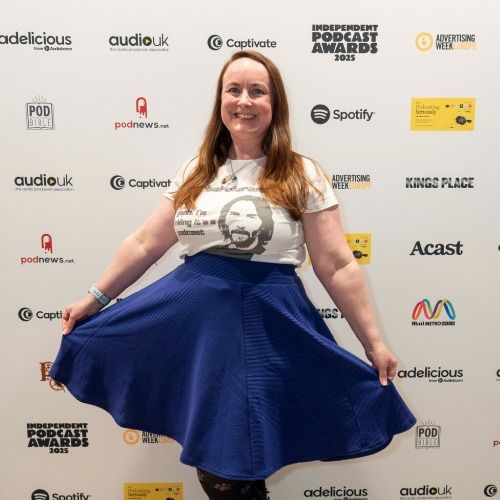
Verbal Diorama is hosted, produced, edited, researched, recorded and marketed by me, Em.
Theme Music: Verbal Diorama Theme Song
Music by Chloe Enticott - Compositions by Chloe
Lyrics by Chloe Enticott (and me!)
Production by Ellis Powell-Bevan of Ewenique Studio
Thank You to Our Patreon Supporters
Current Patrons: Simon, Laurel, Derek, Cat, Andy, Mike, Luke, Michael, Scott, Brendan, Ian, Lisa, Sam, Jack, Stuart, Nicholas, Zo, Kev, Danny, Stu, Brett, Xenos, Sean, Ryno, Philip, Adam, Elaine, Aaron and Steve.
Thank you for supporting Verbal Diorama.
Mentioned in this episode:
Please consider supporting this podcast on Patreon
This podcast uses the following third-party services for analysis:
Podscribe - https://podscribe.com/privacy
OP3 - https://op3.dev/privacy
Transcript
Hi, everyone. I'm Em. And welcome to Verbal Diorama, episode 339, Minority Report. This is the podcast that's all about the history and legacy of movies you know, and movies you don't.
That's just Popped a red ball for this episode, Victim, this episode Perpetrator Me. Because I'm gonna kill it this episode. Haha. See what I did there? Welcome to Verbal Diorama.
Whether you're a brand new listener, whether you're a regular returning listener, thank you so much for being here. Thank you so much for choosing to listen to this podcast. I am, as always, so happy to have you here for the history and legacy of Minority Report.
And if you are a regular returning listener, thank you so much for watching, returning to this podcast, listening to this podcast, and continuing to listen and support this podcast. This podcast has been going for over seven years and now 339 episodes. And I'm always so blown away by your support.
So thank you so much for your continued support. It means so much. So this month I wanted to focus on our ongoing cinematic relationship with AI. I've dubbed the month AI Pro just because.
And AI is a topic that's rarely out of the news for both good and bad reasons.
And last episode I started in the 80s with Short Circuit, a movie that hasn't aged that well, but also kind of has, because Number five is incredible and just such a wonderful creation. And that movie is 40 years old and number five has not aged a day.
Kind of going from the 80s and all of what the 80s encompassed with the Cold War and fears over nuclear war, etc, kind of jumping over the 90s. Because I thought about it and honestly, I've already done an episode on Terminator 2, Judgment Day, and what other AI movies are there in the 90s?
I'm kidding. That is episode 175 of this podcast.
also wanted to move into the: Em: n Washington D.C. in the year:From deep within the Justice Department's elite Pre Crime unit, all the evidence to convict from imagery alluding to the time, place and other details is seen by the Precogs, three psychic beings whose visions of murder have never been wrong. It is the nation's most advanced crime force. A perfect system.
And no one works harder for Pre crime than its top man, Chief John Anderton, destroyed by the tragic loss of his young son.
And Anderton has thrown all of his passion into a system that could potentially spare thousands of people from the tragedy he lived through six years later. The coming vote to take it national has only fueled his conviction that Pre Crime works.
He has no reason to doubt the system until the Precogs predict that he will murder a total stranger in less than 36 hours. And John Anderton becomes pre crimes number one suspect. Let's run through the cast. We have Tom Cruise as John Anderton.
Max Von Sydow as Lamar Burgess. Colin Farrell as Danny Witwer. Samantha Morton as Agatha. Neil McDonough as Gordon Fletch Fletcher. Patrick Kilpatrick as Geoffrey Knott.
Lois Smith as Dr. Iris Hineman. Catherine Morris as Lara Anderton, Tim Blake Nelson as Gideon. Daniel London as Wally and Peter Stormare as Dr. Solomon P. Eddy.
Minority Report has a screenplay by Scott Frank and Jon Cohen, was directed by Steven Spielberg and was based on the Minority Report by Philip K. Dick. This AI April. It's a great name, isn't it? We've already talked about Short circuit in the 80s, but and bypassed the 90s.
Now we're in the:It's both dystopian and utopian. It predicts the future. Our current with remarkable accuracy. We may not have Pre Crime, but we have touchscreens.
We may not have cars that can drive down walls, but we do have driverless autonomous cars and cars that can be tracked. We may not have retinal scanners in shops and public transport, but we have devices that are constantly listening.
They know our previous purchases or where we go on the Internet. And CCTV is always recording our every move.
We may not have Precogs, but many US police forces often use drones to scout areas before human officers go in. They may not look quite like spiders, but but they have thermal imaging and heat scans which require warrants to be used.
We can't yet predict murder before it happens, but the genius of Minority Report is that being honest, we probably don't want that future, despite the lives it will save. Because like everything, there's always a cost.
is based on Philip K. Dick's:Plugged into a great machine, these Precogs allow a division of the police called Pre Crime to arrest suspects before they commit any actual crimes.
When the head of Pre Crime, John Anderton, is himself predicted to murder a man whom he's never heard of, Anderton is convinced a great conspiracy is afoot.
Like much of Dick's work, it explores his own personal anxieties, questions autonomy with themes of authoritarianism, free will, and the fallibility of systems.
The titular Minority Report being the difference of opinion from one of the Precogs, it isn't the first Philip K. Dick story to be featured on this podcast.
A Scanner Darkly was the 150th episode of this podcast, and Dick's stories are often make fantastic movies, but aren't always faithfully replicated for the screen. In the case of Minority Report, Dick's story was used more as a jumping off point and much of the plot is changed.
idley Scott's Blade Runner in:But his stories have inspired generations of writers and filmmakers and posed vital questions that continue to resonate with the advancement of society and technology. As I said, there are some differences between the book and the movie.
In the short story, which is set in New York City, John Anderton is a 50 year old, balding, out of shape police commissioner who created Pre crime and and Ed Witwer is his new second in command. The Precogs named Mike, Donna and Jerry are described as gibbering, fumbling creatures.
Physically and intellectually disabled, the Precogs constantly receive information about all manner of future crimes, not just murder. Anderton's would be victim is General Leopold Kaplan, a retired military figure trying to dismantle Pre crime to restore military authority.
Anderton actually has three minority reports showing different possible outcomes. The first is that he would kill Kaplan in order to prevent pre crime from being discredited and shut down.
The second, that after reading the first he would decide to not kill Kaplan.
And the third stating Kaplan had planned to discredit pre crime in order to enact a state of emergency and martial law, resulting in a military couple in which the army would replace pre crime. Anderton chooses to kill Kaplan, fulfilling the first prediction deliberately to preserve the pre crime system, knowing that it means his own exile.
The entire situation becomes a self fulfilling prophecy. At the end, Anderton warns Witwer, who has now inherited Anderton's job, that the same predicament could happen to him at any time.
d by producer Gary Goldman in:He created an initial script with Ronald Shusett, with uncredited writing work by Robert Goethals. Shusett, along with co writer Dan Bannon, created the Alien franchise.
conceived as a sequel to the: otal Recall, went bankrupt in: rights to total recall two in:The only original element from the early Goldman and Shusett script which made it to the final film is the sequence in the car factory, which was an idea that Steven Spielberg loved. This actually led to the original writers suing for the right to have their name in the film's credits as co writers.
But due to the extremely strict rules of the Writers Guild about how much of the script must be written by a person to get credit, the final ruling in arbitration was that the original writers could only get an executive producer credit and not a writing credit.
The initial version of Minority Report was briefly set to be directed by Dutch filmmaker Jan de Bondt, but in a remarkable turn of events, he is instead credited as a producer despite doing no work on the movie. And the reason for that is the involvement of Steven Spielberg.
And this is a project with a long gestation, so let's try and go through the timelines involved.
akout film, risky business in: on a remake of Robert Wise's:After collaborating on the screenplay, they ran into creative differences and King left the project, with Spielberg pushing forward with a new screenwriter, David Self. Meanwhile, Jan De Bont was working on Twister, and producing that movie was Steven Spielberg.
The production was chaotic and allegedly Spielberg visited the set, or more accurately, the local airport where De Bont met him and admonished the director, yelling at de Bont for 15 minutes before leaving in the same jet. Production got back in order and Twister ended up being a big hit. But it's safe to say the two men had a fractured relationship.
But Jan De Bont was hot property at the time. Having directed Speed, Twister was Speed's follow up.
His next film was another troubled production, though, Speed 2 cruise control, which was a critical and commercial disappointment. With Jan De Bont still in post production for Twister, Spielberg offered him a deal.
De Bont could replace him as director of the Haunting, and Spielberg would take over directing duties on Minority Report while De Bont was occupied. And this would lead to De Bonts infamous.
No actual work done producing credit by this point, the Minority Report adaptation had been around for at least a decade. While shooting the late Stanley Kubrick's Eyes Wide Shut, the Minority Report script caught Cruise's eye.
When Cruise read Cohen's script, he passed it on to Spielberg as the project they could finally do together.
And in:The first was Tom Cruise was in the middle of making Mission Impossible 2 in Australia, and that film's schedule kept pushing back, which in turn delayed Minority Report's production.
The delays turned out to be something of a blessing, as Spielberg used the extra time to bring in experienced screenwriter Scott Frank to substantially rework Cohen's material. Frank had already written Little Man Tate, Malice, Get Shorty and Out of Sight.
He'd go on to write Marley and Me, the Wolverine, Logan and the Netflix adaptation of the Queen's Gambit. The final shooting script was very much Frank's, drawing heavily on Cohen's third draft.
Variety reported Frank Darabont would do uncredited script revision work. However, although he was asked, he did the Majestic instead. John August, however, did do uncredited script revision work.
In contrast to Spielberg's next science fiction picture, War of the Worlds, which he called 100% character driven, Spielberg said the story for minority report became 50% character and 50% very complicated storytelling with layers and layers of murder mystery and plot. But Spielberg was also distracted by AI Artificial Intelligence, the long gestating project he inherited from Stanley Kubrick.
After Kubrick's death in:While Tom Cruise was a given, when Spielberg originally signed onto direct, he planned to have an entirely different supporting cast.
He offered the role of Witwer to Matt Damon, Iris Hineman to Meryl Streep, burgess to Ian McKellen, Agatha to Cate Blanchett, and Lara to Jenna Elfman. Streep declined the role. Damon opted out due to scheduling conflicts with Ocean's Eleven and the Bourne Identity.
The role was also offered to Javier Bardem, who also turned it down, and the other roles were recast due to the delays.
uld eventually begin in March:At Spielberg's insistence, Spielberg and Cruise both agreed to each take 15% of the gross instead of any money up front to try and keep Minority report's budget under $100 million. And this was something Spielberg had done in the past with big name actors like Tom Hanks in Saving Private Ryan.
If Spielberg had to take a chance, so did Tom Cruise.
e future reality for the year: In:The delay to filming also proved valuable for both the screenwriter and the Production Designer, Alex McDowell to collaborate on the development of the words and images that would become Spielberg's film.
page: become commonplace in the mid:But during that time they were given the opportunity to develop the interior logic of the practical designs for the cars, weapons and hover packs, and really test everything properly.
Usually they would have four or five months to do this before shooting, but the team had more like 15 months of prep before the movie started filming, which was valuable time to really perfect the design of Minority Report and the believability of the props and sets. Steven Spielberg wanted not to make a science fiction film, but to make a film about a future reality.
r example, we're currently in: In: ck and white leaning into the:Kaminski wasn't the only Academy Award winner behind the scenes either.
There was also Oscar winning editor Michael Khan, Oscar winning costume designer Deborah L. Scott and multiple Oscar winner John Williams composing the score. Kaminsky deliberately over lit the movie and it was shot on film rather than digitally to create the bleach bypass look photochemically.
He shot on high speed film in Super 35 format, which requires an additional enlarging process to increase the overall grain.
Having been told by Spielberg to create the ugliest, dirtiest movie he'd ever shot, Kaminsky alternated between 17, 21 and 27mm lenses, never using a lens longer than 27mm. Alex McDowell studied modern architecture and his sets contain many curves, circular shapes and reflective materials.
The production design team put together an ethos that the pre crime department had to be very clean and clinical. Like any modern corporate headquarters, it was designed as a series of concentric circles based on a ripple pattern.
The precog chamber being the pebble drop in the centre of Pre crime. The and the narrative that starts in the precog chamber ripples out into the narrative of the film and the architecture reflects that.
Even the colour scheme reflects cool blue tones and transparency just like water in a pond.
The pre crime set was the most expensive set in the movie and Spielberg didn't even see it until a couple of days before filming began because he wanted to get that visceral experience seeing it for the first time. Spielberg's vision also extended to the digital prison keeping the pre crime perpetrators in suspended animation.
He saw it as a graveyard with headstones of all the people in storage. And that part of the set was built in previs.
They mastered a conceptual idea of vertical tubes that were underground with headstones and then laid them out in a pattern that the camera would swoop down and follow with each headstone moving up and down to avoid the crane arm. They loved the pattern and rhythm of the shot, animated it first and Spielberg loved the shot he could get from it.
They ended up building the main room the headstones come out of and three or four of the tubes in their entirety with a Dolly arm for the crane arm. But otherwise everything was a green screen set. Now, Minority Report was the first film to have an entirely digital production design.
The term previs as an abbreviation of pre visualization was actually a term borrowed from this film's narrative.
This system allowed them to use Photoshop in place of painters and employ 3D animation programs to create a simulated set which could then be filled with digital actors and they could block shots in advance.
The technology also allowed the tie in video game and the special effects companies to cull data from the previous system before the film was finished, which they could then use to establish parameters for their visuals.
Industrial lighter magic handled the bulk of the effects work, developing entirely new techniques to enhance the CG elements and environments of the futuristic world. The hologram sequence featuring Anderton's ex wife was filmed using 13 cameras simultaneously, all pointing at the actress from different angles.
With the results blended together.
ILM computer graphics supervisor Barry Armour said that they deliberately wanted the holograms to look semi amateurish from the viewer's perspective, but perfect from Anderton's own point of view. John Underkoffler created the gestural language that would allow Anderton to sort and conduct the visual information he was getting from the Precogs.
Commands were developed for stopping time, rolling backwards and forwards and making excerpts or changing views. These pre visual images were created by effects House imaginary forces.
And because the human eye sees in circles, they made the pre visions look spherical. Spielberg wanted the specific hand movements to play like a choreographed dance, with music played during the scene to enhance the dance.
The three Precogs, Dashiell, Arthur and Agatha, named after famous mystery writers Dashiell Hammett, Sir Arthur Conan Doyle and Agatha Christopher, live deep within pre crime headquarters, partially submerged in a fluid that is intended as both a biological nutrient and as a medium that helps to channel future visions into their heads. It also filters the images so the Precogs will only see murder. Samantha Morton considers Agatha the most difficult role she's ever done.
Not just for the emotional gravity inherent in such a complicated and abstract character, but but also for the physical demands of the role. And that was mostly for acting in water.
Costume designer Deborah Scott designed a wetsuit for Morton that enabled her to be protected from the constant submersion. But it was still an arduous task.
The part required Morton shave her hair and her eyebrows, and honestly, it sounds like a wholly uncomfortable experience for her. And to add to the ethical questions around the pre crime system, the three Precogs are not even really treated as human. Beings.
They are constantly traumatized to predict these murders. They're not even being treated like employees. They seem to have zero rights, human or otherwise.
And yet again, it's adding to the idea that this may be a future that without the nuances, we may want to eradicate murder, but at what cost? At the cost of the freedom of these three individuals.
Now, some may say the lives of three people versus the lives of all of the murder victims, but it's never just that black and white.
And of course throughout all of this we have the skeptic Danny Witwer, played by Colin Farrell, who's positioned as a bad guy, but as we find out, he's not against Anderton, just against the idea.
filmed between March and July:Even after an assistant director told him he couldn't work in that condition, Farrell continued, and it took him 46 takes to shoot the I'm sure you've all grasped the fundamental paradox of pre crime methodology scene. Crikey, I couldn't even say that sober, let alone drunk. Tom Cruise was apparently livid.
nter, doing the same again in:Considering this movie is almost the same age as Farrell turned while filming, the visual effects still look great.
The sequence where police pursue Anderson across the elevated roads was shot entirely on blue screen with animatics by Pixel Liberation Front used first to work out traffic flow. Tom Cruise physically jumped and hung from full scale car replicas on set, which were then digitally replaced with computer generated vehicles.
ILM compositing supervisor Scott Frankel described the vertical alley chase as one of the film's central sequences. This was filmed on set at the Warner Bros. Studio lot.
The building heights were digitally extended, walls were added, and skies were replaced entirely to remove any trace of the wires used to suspend crews. In reality, the set was only four stories tall and it was made to look like it was 12 stories tall.
But like most movies that age particularly well from this era. The effects work wasn't purely digital.
ILM art director Alexander Laurent noted that they used traditional physical models alongside the 3D work specifically to make structures feel like they were made of concrete and steel rather than weightless computer geometry. The auto factory chase scene was filmed in a real facility facility using real welding robots.
The stunt crew on Minority Report was the same crew used in Mission Impossible 2 PDI DreamWorks were responsible for the spider robots used in the eye scanning sequence. They took inspiration for the design of the spiders from deep sea jellyfish and their bioluminescent little tentacle lights.
This actually turned out to be PDI DreamWorks final live action visual effects job before the studio shifted exclusively to animated features.
To make the world of Minority Report as real as possible and to highlight the predicted lack of privacy and excessive marketing and advertisements, you had to use real companies and product placement. But the aesthetics still have to match and companies are paying to be included in your movie.
So they pitched a car design to Lexus, a design of Harold Belker's, and all Lexus stipulated was a polished wood interior. Otherwise, they were happy for the production to control the design of the futuristic cars.
They decided to go with magnetic levitation for the design. And the electric car was fully functional, built from the ground up, and could reach 60 miles an hour.
And as it turns out, the titular Minority Report is just a MacGuffin because as Agatha reminds John, he has a choice and he chooses not to fulfil the prophecy, knowing that it will discredit the whole pre crime department. The final act of the movie is full of satisfying resolutions.
John's wife finds him in the graveyard, he somehow gets free, and a series of events lead to Lamar Burgess committing suicide rather than shooting John. It's a remarkably positive ending to the movie, and many question whether it was all real or.
Or was it John comatose in the graveyard, life flashing before his eyes and all his dreams coming true. And the movie leaves it ambiguous enough for it to be either. And it's time to segue into the obligatory Keanu reference of this episode.
And if you don't know what that is, it's where I try and link the movie that I feature with Keanu Reeves just because he is the best of men. And there were a couple actually that I could have used for this one.
We've obviously got the Jan de Bont connection for speed, but I feel like I use that quite frequently whenever Jan de Bont pops up or Sandra Bullock pops up in a movie.
But the one thing that I thought immediately when re watching this movie was this movie's got Peter Stormare in it and if you've ever seen the movie Constantine, you will know that Peter Stormare is also in the movie Constantine alongside Keanu Reeves as genuinely one of the greatest performances of the Devil of all time. And so that is the easiest way to link Keanu to the movie Minority Report via Peter Stormare who is incredibly creepy in this movie.
As I mentioned, the score for Minority Report was composed and conducted by regular Spielberg collaborator John Williams. He was inspired by Bernard Herman's film music and and instead of focusing on science fiction elements, he made a score suitable for a film noir.
Several classical pieces including Franz Schubert's Symphony Number 8, Unfinished Symphony, Hayden's String Quartet and Tchaikovsky's Symphony Number 6 were used in the score at the specific request of the studio. So the marketing for this movie was basically Spielberg and Cruise at the height of their respective powers.
They didn't really need to market this movie.
June: June:It would actually beat Lilo and Stitch on the opening weekend by a few hundred thousand dollars, but across the week Lilo and Stitch was the bigger movie and that ended up grossing number one that week.
The summer of:On its $102 million budget, Minority Report grossed $132.1 million domestically and $226.3 million internationally for a total worldwide gross of $358.4 million.
The DVD for Minority Report was two years in the making with award winning DVD producer Laurent Boudereau given full access to the set from the first day of filming. Bozereau chronicled the production.
He shot hundreds of hours of high definition video which results in more than an hour of featurettes on specific areas of filmmaking, including interviews with Steven Spielberg and Tom Cruise.
The marketing campaign for the DVD and VHS release included a tie in video game Minority Report Everybody Runs, developed for the PlayStation 2 GameCube and Xbox, but critical response to the video game was mixed. Critical response to the movie, though was positive.
On Rotten Tomatoes, Minority report has an 89% rating and the site's critical consensus reads thought provoking and visceral. Steven Spielberg successfully combines high concept ideas and high octane action in this fast and febrile sci fi thriller.
The film earned nominations for awards including Best Sound editing at the 75th Academy Awards and best visual effects at the BAFTAs, and it would lose both to the Lord of the Rings the Two Towers.
It was nominated for 11 Saturn Awards, including Best Actor for Tom Cruise, Best Supporting Actor for Max Von Sydow, and Best Music for John Williams.
It won four best Science Fiction Film, Best Director for Steven Spielberg, Best Writing for Scott Frank and John Cohen, and Best Supporting Actress for Samantha Morton. And you could argue how could you do a sequel to Minority Report?
Well, they did try because in: t turned it down and in March:The story is set in London and the lead role was gender swapped to Dame Julia Anderton. Minority Report is a work of fiction. Or is it?
Much of it has actually come true in part, but the whole precock thing, predicting crimes before they happen isn't real, right?
Well, in: In: In:One of the main tasks of this group would be to use machine learning algorithms to analyze historical crime data to predict future crimes and prevent them identify potential cyber threats by detecting unusual patterns in computer networks, including malware, phishing and other types of cyber attacks, and monitor social media activity to detect any signs of communication about potential future crimes. None of the news articles mention similarity to Minority Report, but it is there, and you don't even need to squint now.
It's not surprising that in the aftermath of 9 11, there were a lot of people interested in using computers to analyze data and predict who might become a terrorist. But there's a big difference between frustratingly posting on social media after a hard day at work.
Something like, ah, I hate my boss, I'm going to end him to actually murdering your annoying manager. You can be angry about political events and express that anger, but that doesn't mean you're actually going to do something violent.
And just going into the world of Minority Report for a second.
Even if there were no Minority Reports and It was a 100% functional accurate system, there is still a huge ethical and moral question to locking someone up before they've done something. Surely that goes against multiple human rights laws, and you would have no right to appeal because you're placed in a medically induced coma forever.
No rights, no lawyer, no due process, no judicial system, no being found not guilty for murder. At least not to mention, as I say, the human rights of the Precogs.
But then, these people aren't seen as human, and neither are the perpetrators, so this movie's world justifies it that way. The future in Minority Report is a future remarkably similar to our own. A hodgepodge of neo noir modernist aesthetics.
Dingy alleyways, blue hued streets at night, holographic displays, sleek electric cars and devices. Their eye scanners in the movie, but their phones in our reality. Tracking where everyone is and what they're doing. Buying, looking at, thinking.
Case in point, while I was working on Short Circuit, an appliance in my kitchen actually did short circuit. Oh, the irony. It's fine. No harm came to anything else. But that appliance is now disassembled. I mean dead. Not literally disassembled.
I haven't actually done that, but I've been looking at replacing it and I've gone to several websites to price check and things like that. But now across social media, I see ads for those appliances with offers, deals Buy from us. No, buy from us.
In many ways it's useful, but also mega annoying.
Because our use of the Internet on phones or laptops, looking for terms in search engines or across social media means we are often automatically consenting to this level of targeted advertisement, despite us having to consent to cookies and privacy settings on social media being robust, our privacy is almost always being invaded. It is inescapable and somehow Minority Report predicted it.
The more I watch this movie, the more impressed I am with how well made it is and how it treats exposition as not a throwaway thing but actually having purpose in the conversation.
The scene specifically with skeptic Danny Witwer asking questions about how Precrime knows the people they arrest are guilty of when they have broken no law yet and that it's not the future if you stop it. And the response is simply roll a ball, have Witwer catch it and be asked why he caught it. He responds because it was going to fall.
And Anderton says that it didn't fall. The fact you prevent the ball from falling doesn't change the fact that it was going to fall. And I love it so much.
It's a great Spielberg movie and a great Cruise movie. And while I enjoy War of the Worlds, I like this collaboration so much more.
It speaks to our past, present and future, and we didn't pay attention well enough to see that this movie was actually Agatha screaming at us to run.
Because if you commit a crime nowadays, you're almost automatically judged guilty by the court of public opinion and the punishment is swift and decisive before you've even ended up in court. This is a Tom Cruise vehicle through and through, so of course he runs a lot.
But Cruise is at his best when he plays against type Interview with the vampire, Tropic, Thunder, Edge of Tomorrow are all among his best work. But even this movie, where he's the star and the reluctant hero, has an air of otherness to it.
His hair is cropped, he's addicted to drugs and still mourning the loss of his son, and he's desperate to connect to holographic images to dull the pain of his loss. He has his eyes transplanted, disfigures himself, and literally runs to get to the truth about pre crime, a system he believed in.
And in the process he can't save his son or avenge his disappearance, but he can save Agatha and he can dismantle a corrupt system. But as it turns out, despite everybody running, we still can't run from the future the that this movie predicted. Thank you for listening. As always.
I would love to hear your thoughts on Minority Report. And thank you for your continued support of this podcast.
r fetched when it came out in:Please join me next week for the history and legacy of her thank you for listening to Verbal Diorama, a totally free and independent podcast that relies on listener support. If you want to show your support in multiple different ways, you could leave a rating or review wherever you found this podcast.
You could tell your friends and family about this podcast or you could find me and follow me on social media and you can share the podcast that way. I am erbaldiorama across social media where you can share posts like posts, comment on posts.
It all helps really to get the word out there to hopefully get other people to know this podcast and know the recent episodes that I've put out. I genuinely love doing this podcast and anything you could do to help would be so appreciated.
A huge thank you to the incredibly generous patrons of this podcast. I could not do what I do without their support.
To Simon, Laurel, Derek, Kat, Andy, Mike, Luke, Michael, Scott, Brendan, Ian, Lisa, Sam, Jack, Dave, Stuart, Nicholas, Zo, Kev, Danny, Stu, Brett, Xenos, Sean, Ryno, Philip, Adam, Elaine, Aaron and Steve. Please consider joining them and supporting this podcast on Patreon if you have the means to.
If you want to get in touch, you can email verbal dioramail.com you can also go to verbaldiorama.com and you can fill out the contact form. You could say hello, you can give feedback or you can give suggestions as well. I would genuinely love to hear from you.
You can also DM me on social media as well if that's an option available to you. I love to hear from people and I always try to respond as quickly as possible.
Thanks again for listening and thanks for supporting independent podcasting. It means more to us than you know. And finally
Em:Bye.