Episode 328
KPop Demon Hunters
Verbal Diorama is a podcast all about How It's Done. It being movies, and to be honest, this one is as Golden as they come. I'm Free to Takedown the history and legacy of KPop Demon Hunters, with the outcome of me becoming Your Idol. This is What It Sounds Like... my little Soda Pop.
When director Maggie Kang set out to create an animated musical combining K-pop, Korean mythology, and a demon-slaying girl group, she had a clear vision: to make a film authentically rooted in Korean culture. After more than a decade working on major animated projects, Kang pitched what she called her "love letter to K-pop" and her Korean heritage to Sony Pictures Animation. The result was KPop Demon Hunters, a film that would go on to become a global phenomenon that no-one saw coming.
The film's success exceeded all expectations. KPop Demon Hunters became Netflix's most-watched film ever with over 500 million views, surpassing even Squid Game. The soundtrack made history as the first film soundtrack to place four songs in the Billboard Hot 100's top ten simultaneously, with lead single "Golden" holding the number one spot for eight weeks. The song earned five Grammy nominations, and songwriter EJAE became the first Korean American woman nominated for Song of the Year.
KPop Demon Hunters represents a significant evolution in the Korean Wave. Created by a largely non-Korean production team in America, the film nonetheless maintained deep cultural authenticity, from its references to Korean girl groups of the past, and to Korean shamanism, to the small details like how characters use their chopsticks. It combines vibrant animation with KPop culture, creating a unique visual and audible feast. The soundtrack is not just catchy; it's Golden.
Play me on repeat 끝없이 in your head.
Support Verbal Diorama
Loved this episode? Here's how you can help:
⭐ Leave a 5-star review on your podcast app
💰 Join the Patreon for bonus content and early access
☕ Send a tip to support the show
📱 Share this episode with fellow film lovers
Get In Touch
I would love to hear your thoughts on KPop Demon Hunters
- Twitter: @verbaldiorama
- Instagram: @verbaldiorama
- Facebook: @verbaldiorama
- Letterboxd: @verbaldiorama
- Email: verbaldiorama [at] gmail [dot] com
- Website: verbaldiorama.com
About Verbal Diorama
Ear Worthy 2024 Best Movie Podcast Winner | Golden Lobes 2025 Earworm Award Nominee | Ear Worthy 2025 Best Movie Podcast Nominee
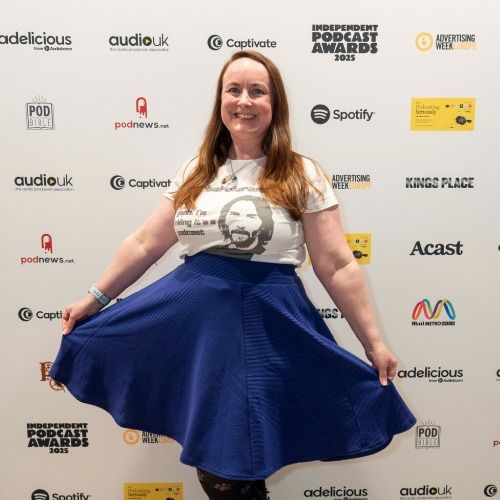
Verbal Diorama is hosted, produced, edited, researched, recorded and marketed by me, Em.
Theme Music: Verbal Diorama Theme Song
Music by Chloe Enticott - Compositions by Chloe
Lyrics by Chloe Enticott (and me!)
Production by Ellis Powell-Bevan of Ewenique Studio
Thank You to Our Patreon Supporters
Current Patrons: Simon, Laurel, Derek, Cat, Andy, Mike, Luke, Michael, Scott, Brendan, Ian, Lisa, Sam, Jack, Stuart, Nicholas, Zo, Kev, Heather, Danny, Stu, Brett, Philip M, Xenos, Sean, Ryno, Philip K, Adam, Elaine, Kyle, Aaron and Sebastian
Thank you for supporting Verbal Diorama.
Mentioned in this episode:
This podcast uses the following third-party services for analysis:
Podscribe - https://podscribe.com/privacy
OP3 - https://op3.dev/privacy
Transcript
Hi, everyone.
I'm Em, and welcome to Verbal Diorama, episode 328, KPop Demon Hunters. This is a podcast that's all about the history and legacy of movies you know, and movies you don't. That tells you how movies are done, done, done.
Welcome to Verbal Diorama. Whether you're a brand-new listener to this podcast, whether you're a regular returning listener, thank you for being here.
Thank you for choosing to listen to this podcast. I am so happy to have you here. And I don't know if you've realized my voice is very excited for the history and legacy of KPop Demon Hunters.
And just to say if you are a regular returning listener, thank you for continuing to listen and support this podcast. This podcast is seven years old this year, and one of the things that I love to do during this period of the podcast is almost having a birthday is.
I do something called animation season and it's something that I do every January and February. The podcast's birthday is in February. So welcome once again to the sixth annual animation season. I am a huge fan of animated movies.
I really genuinely believe that more podcasts should talk about animated movies. And what I want to do with this season is make it a celebration of animation in all its forms.
So traditional, 2D, hand drawn, stop motion, CGI, a mix of everything. The verbal diorama. Animation season mantras are that animation is not just for children. Animation is also not a genre.
Even though Netflix will tell you otherwise, it's not. Animation is the perfect art form.
It is capable of depicting anything, anyone, even demon hunters singing K Pop while flying in the sky without the limitations of live action cinema. And this is why animation season is so important to me, to this podcast, maybe not to everyone, but definitely to me.
To highlight incredible animated movies that you may have discounted for whatever reason. Maybe including this one, actually.
Although to be honest, I don't think many people have discounted this because as I'm gonna come to, it's quite popular, but there's some incredible storytelling in animation. And this is why I love to do this particular season. This is the newest movie in the season, but it was a movie that I knew immediately had to go in.
As soon as I saw it last summer. I absolutely fell in love with this movie. It's full of rich visuals. Korean culture has a relatable story and an absolutely banging soundtrack.
And when original animation is struggling and studios rely more on sequels, prequels, and shoulder live action remakes, somehow a story about a KPop girl group fighting demons became the most watched movie on Netflix ever. And Netflix didn't even see it coming. Here's the trailer for K Pop Demon Hunters.
Em:For generations, a trio of female pop singers would use their musical abilities to protect the innocent from demons and keep them from entering the human world.
In the present day, Huntrix consisting of Rumi, Mira and Zoey have taken on the mantle of pop singers and demon hunters, keeping the Hon Moon sealed.
Frustrated with the inability to devour human souls, the demon King Gwma enlists rogue demon Jinu and four others to create the one thing that could take down a K Pop girl group. A K Pop boy band with abs. Let's run through the cast of this movie.
We have Arden Cho as Rumi EJAE as the singing voice of Rumi May Hong as Mira Audrey Nuna as the singing voice of Mira Ji Young Yoo as Zoe Rei Ami as the singing voice of Zoey Ahn Hyo Seok as Jinu Andrew Choi as the singing voice of Jinu Yunjin Kim as Celine Lea Salonga as the singing voice of Celine Daniel Dae Kim as He La Han, Ken Jeong as Bobby and Lee Byung Hun as Gwi-ma K Pop Demon Hunters has a screenplay by Danya Jimenez, Hannah McMechen, Maggie Kang and Chris Applehans Story by Maggie Kang and was directed by Maggie Kang and Chris Applehans. Couple of things before we start. I am as always, very sorry for any mispronunciations of Korean names or words.
I promise I do always try to get them right, but sometimes I'm English and sometimes I get it wrong, so apologies if I mispronounce anything.
Hyundrix are the current in a long line of Korean female girl groups across the decade, all responsible for maintaining the Honmoon, a magical barrier that prevents the demons from entering our world. K Pop is a phenomenon with some of the most successful bands in the world being K pop groups.
nk that this Craze started in:And while the movie depicts a 90s girl group starring Celine and Rumi's mother, they're not the only generational legacy within Korean pop music or Korean girl groups who have been literally strengthening the Hon Moon in real life for decades. The Jeogori Sisters are considered Korea's first girl group.
Formed in:When they faced pressure to remove the iconic Korean folk song Arirang from their repertoire, Lee cleverly wove the song into their performance of Maiden Chorus, persuading Japanese officials that the two pieces harmonized perfectly. They covered traditional Korean songs on stage and didn't release original music.
years until they disbanded in:But Lee Nan Young would also shape Korean music going forward.
m Hye Song tragically died in:She would end up forming the Kim Sisters, made up of her daughters, Sister Sue, Aija and Mia, and they would become the first Korean music group to achieve success in the US Market and created a direct lineage between Korea's first girl group and the first Korean girl group to succeed in America. Lee Nan Young taught her daughters to sing using black market American pop records to perform for US Soldiers stationed in Korea.
anding English at first. From: l, who flew to South Korea in:They would perform over 20 times on the Ed Sullivan show wearing traditional Korean hanbok while singing American hits, acting as cultural ambassadors.
They even had a Las Vegas residency, spending 15 years performing at the Stardust, five years at the Las Vegas Hilton and 15 years at the Holiday Casino.
Their shows featured their vocal harmonies, impressive instrumental skills and energetic performances that blended Korean and American entertainment styles. Their discipline, versatility and survival driven determination foreshadowed the intense training system that would later define K pop.
The group would retire in: ng the Silver Bell sisters in:So the Sunlight Sisters would be in the tradition of the sorts of naming conventions of Korean girl groups of the past. But K Pop isn't the only way this movie intertwines with Korean culture.
It's also deeply rooted in Korean shamanism, Korea's indigenous folk religion and one of the oldest spiritual traditions on the peninsula, with evidence dating back as far as 5,000 years ago. But it's not a religion in the traditional sense. There's no doctrine, no central authority, and no overarching hierarchy.
It revolves around deities and ancestral spirits, the belief that the spirit world directly influences human affairs, with complex hierarchies of spirits, including sky gods, nature spirits, ancestral spirits, and guardian deities. The ritual specialists are mostly female and are called Mudang. They serve as mediators between our world and the spirit realm.
The shamanic roles are either bestowed upon someone possessed by the spirits or are given the gifts through matrilineal lines, basically a child inheriting it from their mother.
Director Maggie Kang has confirmed in interviews that the idea of protectors drawing supernatural powers from song and dance was inspired by gut, the name of the rituals where the mudan used song and dance, as well as offerings of food and drink and storytelling, all while wearing traditional clothing to protect communities from demons and evil spirits. So Maggie Kang, she really was the catalyst to get this movie made. She was born in Seoul, but moved to Toronto when she was five.
in Hollywood animation since: d somewhat of a resurgence in:Director Bomb has always been a particular favorite of mine, but there's also the works of Park Chan Wook, Lee Chang, Dong, Yoon Sang Ho and Hwang Dong Hyuk.
I've featured a few Korean movies on this podcast in the past, Snowpiercer, the Host, Train to Busan, and all of them include social commentary, blend genres and are just really great movies. In reality, this all forms part of the Hallyu Wave or Korean wave.
es, which started in the late:That K pop demon hunters has come now is in many ways. How did it take so long for Western animation to celebrate Korean culture?
. She was invited to pitch in:So that night, Kang and her husband, Radford Secrest, were in a car driving around the neighborhood while their baby daughter was sleeping in the back seat. And together they started spitballing ideas about demon hunter girls with Korean demons.
She liked the idea, but it needed another Korean element and they settled on K Pop, which would also make the movie a musical.
And it meant they could visually represent demon hunting sequences as music videos, which added layers of visual opportunity that you just don't get in live action filmmaking.
Having the movie rooted in Korean mythology and literal demons as well as K pop meant the creative team felt they were limited to the levels of negativity they could portray. The music industry is its own demon, the K pop industry even more so.
Maggie Kang would say in an interview that she didn't want to lead with negativity, that the demon hunting aspect naturally became a metaphor for the messier parts of the industry. The pressure to be perfect, to hide your flaws, to perform a polished version of yourself, not just for the public, but even within your own group.
The rabid fans are still there and the parasocial relationships to their K pop idols. But for Kang, this was the first animated movie set in Korean culture.
And she felt focusing on the darker aspects of the K pop industry would lead to the movie becoming unbalanced. And so they were left out.
The irony of course, being that EJAE, who wrote many of the songs for the movie, as well as providing the singing voice of Rumi, was signed to a K pop idol contract at the age of 11 years old. And she stayed with SM Entertainment, one of the first K pop companies, for over 10 years.
She was never approved as an artist and never assigned a group or solo deal. So EJAE lived this life that a lot of unsigned K pop idols live.
Many of these contracts are strict, with extensive training in singing, dancing and foreign languages, with the company maintaining Idol's image, social media presences and prioritizing fan relationships through concerts and meetups. The founder of SM Entertainment modeled the business model on 90s US boy band New Kids on the Block.
Working conditions are harsh, with companies like SM Entertainment being called factories and refusing to share adequate profits with the idols. Nevertheless, SM Entertainment receives 300,000 applicants from nine countries every year, so people still want to become K Pop Idols.
But anyway, the information about the K Pop industry and what it's like out there, the faults and fears must never be seen, etc. Is available on the Internet, as is a lot of the information I'm going to go through in this episode available in more detail on the Internet.
But Maggie Kan had this idea. She pitched it to Sony, the pitch was successful and Kang continued working on the project for a year.
And then Wish Dragons director Chris Applehance got in touch with as she told him what she was working on. He'd just finished Wish Dragon, a project he'd moved to China for two years for, and planned to take a break.
But he loved the idea of K Pop Demon Hunters and was on board from their first conversation while they were working on the story and themes, with Kang specifically wanting to not only focus on Korean culture but also female representation. She wanted this trio to be sexy, aspirational pop star superheroes, but also goofy and messy and funny.
She wanted to take inspiration from how Bong Joon Ho Ju juggles different themes in his movies than blending darkness and light.
And if this movie could be summed up in one single word, it would probably be authenticity, trying to make every element authentic as well as supernatural and comical. Nicole Perlman would join as a story consultant, contributing to character and story elements.
And if you don't know who Nicole Perlman is, she co wrote Guardians of the Galaxy and also wrote the story for Captain Marvel. It was Perlman who discovered screenwriters Danya Jimenez and Hannah McMechen and suggested them to co write the screenplay for K Pop Demon Hunters.
After meeting at University, Jimenez and McMecan began their partnership with a shared love for comedy and of exploring the messier side of womanhood.
After their first script got into the Sundance Feature Lab, they were approached by Nicole Perlman who told them about a movie she was working on called K Pop Demon Hunters. They knew nothing about K Pop, but they did know about female friendships and we love when movies focusing on women get female screenwriters.
Uncredited writers on screenplay included Bo Yeong Kim and Erica Lipoldt.
In March:This movie was seven years in the making and early on in the process, earlier than you might think, singer songwriter EJAE joined the movie to consult on the music and I am going to come back to EJ and the music later. But her involvement lends such credibility and this was something else that Maggie Kang has always spoken of.
The fact that Sony and Netflix, who would end up partnering on this movie, were very keen to keep it authentically and unapologetically Korean, with the aesthetic woven into the narrative visuals and indeed the songs, which had to be proper K pop hits, not just pretend to be as well as be a love letter to K Pop and its fans. Almost as if this movie predicts its band's own real world success.
Even the designs of Hunt Tricks and the Saja Boys were based on real K pop groups, with 2ne1 and Blackpink an early reference for Hyun Tricks and K Pop boy group archetypes for the Sasha Boys. Obviously K Pop idols are all gorgeous, but each member tends to bring a different look or style.
The main idea for Huntrix was beautiful but not overtly sexualized, but still strong and feminine, and the sheer number of references to Korean culture, food and mythology are impossible to list in one episode of this podcast, but some notable ones include the fact that each Huntrix member wields a weapon inspired by traditional Korean objects.
So Rumi's blade references a Sangyong or four tiger sword, Mira uses the Gokdo curved moon sword, and Zoey's twin blades are based on sinkal or divine knife, a spiritual weapon used by shamans. The tiger Derpy and the magpie Sussy symbolize strength and good fortune, respectively.
The character's design is directly inspired by Minhwa traditional Korean folk paintings, especially the Jakodo or Hojakdo tiger and magpie paintings.
These paintings, popular during the Joseon dynasty, used satirical imagery of comical tigers and dignified magpies to offer social commentary representing authority and the hope for positive tidings. No word on whether the magpie wore the tiger's hats, though. The tiger would be a bit clumsy and silly and the magpie was a genius.
Generally those magpies aren't six eyed though, and the team knew that they would probably get pulled up on these depictions of Korean mythology and tradition.
So they also had a cultural advisor, Professor Mijong Mimi Kim, who teaches at Washington University in St. Louis, who helped the team integrate cultural specificities authentically in both storytelling and character, environment and prop design, and would flag any cultural inaccuracies. Some people on the crew were of Korean heritage, but many were not Korean.
But those that weren't were so excited to dive into a culture that they didn't know and learn it.
While much in this movie came from Korean legends and mythology, the Honmoon was completely made up in the sense that originally it was just called the barrier or the shield, but they realized it needed a name, and a name that worked in Korean and English.
Maggie Kang wrote down a bunch of Korean words that mean barrier or door, but the words were hard to say in English, so she came up with honmoon, literally meaning spirit gate or spirit door. It was initially temporary, but just like the title K Pop Demon Hunters, Honmoon just stuck.
And the term saja duly alludes to the Joseon saja, a figure in Korean folklore which is comparable to the Grim Reaper and also the Korean word for lion saja, with their mascot being a lion's head and their fans being called Pride. The film features iconic Seoul landmarks such as the N Seoul Tower on Mount Nam, Bukchon, Hanok Village, Naksan park, and sweeping cityscapes.
bad pun soul of the movie. In:They visited locations including Gwangjang Market, Namsan Tower, the Olympic Stadium, Myeongdong shopping district, and Seonsan Folk Village.
Bukchon Harok Village was chosen for the meeting between the main characters of Rumi and Jinu, where they sing the song free with the juxtaposition of traditional and contemporary architecture reflecting the characters themselves.
Even the food became a character in its own right, with scenes showing beloved Korean dishes like gimbap seaweed rice rolls, ramyeon instant noodles and guk bap rice in soup, showing international audiences the flavors of everyday Korean life. The members of Hunt Tricks even eat guk bap with their chopsticks neatly placed on a napkin, which is a familiar habit among Koreans at restaurants.
Then there's the very specific animation styles, Heart eyes, popcorn eyes, chibi art moments which intentionally were meant to feel very anime and k drama.
They intentionally referenced coming of age sports drama, weightlifting fairy Kim Bok Ju and the way the character would go from over the top silly to heartbreaking sincerity in seconds.
They had to treat the two casts for the music and the acting separately because music was needed early on in the process, but voice actors were needed much later and finding voice actors for the roles proved challenging since Maggie Kang insisted on hiring Korean actors for authenticity, but they also needed to be fluent in English. While watching Business Proposal, she saw Ahn Hyo Seop answering the phone in English and knew immediately she wanted him for Jinu.
Jinu would actually be AHN's first English speaking role. Even the name Jinu has significance. It's a nod to a Korean hip hop group called JinuSean.
Jinu is apparently a very popular name in Korea, but Maggie Kang's father is called Sean, which is very uncommon in Korea as a given name. So the name Jinu came from JinuSean.
Both Maggie Kang and Chris Appelheart's favorite character is Mira, and out of all of the cast they found casting Mira the easiest because they met with Mae Hong and she just was Mira. She had the same nonchalant energy and they loved her voice. Casting Rumi was the most difficult out of all of the Huntrix girls.
They'd looked at casting Koreans in Korea, but there was a language barrier. They knew of Arden Cho because she'd already worked with Netflix before. Cho auditioned for the role of Celine and never considered herself as Rumi.
She was born in America but struggled to find her identity as an Asian American and struggled with being treated as not American because of her Korean heritage and being the daughter of immigrants.
Rooney coming to terms with her own mixed heritage as part human, part demon really resonated with Cho, who felt she didn't see the Korean representation on film and TV when she was younger and relished the idea of now being that representation for viewers of Korean descent.
Ji Young Yoo was also born and raised in America as the daughter of immigrant Korean parents, and Zoey is the only member of Huntrix in that situation. Torn between two worlds, being both Korean and American but not feeling like you fit in with either.
Yu brought a lot of her own experiences to Zuri, but also her optimism. In fact, all of this cast are literally the same as the Huntrix trio, except Arden Cho is a part demon.
Each of the actors relates to their character in some way and they share personality traits. Gwi-ma was originally going to be more of a comedic character and more flamboyant and also had a past as a wannabe idol.
They envisioned jypark, the founder of JYP Entertainment, as the character, but as he changed and became more sinister and more of a traditional villain, they went with Lee Byung Hun, who most people will know from Squid Game but has also starred in both Korean and Hollywood blockbusters.
Gwi-ma also doesn't appear in Korean myths himself, but the name Gwi means ghost, spirit or demon and Ma means evil spirit or demon, so Gwi-ma translates to demon, ghost or evil spirit.
Lee Byung Hun was Maggie Kang's ideal choice as she considers meeting him a highlight of her career, and it's no coincidence that the young Rumi is played by a young girl called Rumi. Rumi Oak voices young Rumi and she also happens to be Maggie Kang's daughter.
She named the character of Rumi after her daughter and Rumi was the baby in the car in the story of how the pitch for K Pop Demon Hunters came to be, Josh Beveridge was the animation director, and while Sony's Spider Verse movies had wowed with their 2D 3D hybrid style, Maggie Kang declined to use the same.
Prioritizing the look and feel of anime, but with a bold graphic look and bright colors, great effort was taken to authentically represent Korean identity through character animation, such as through eye and mouth shapes.
Although the characters speak English, the film's animators designed the characters to use mouth shapes specific to the Korean language while speaking.
Obviously, the hyper ridiculous Chibi or demi Chibi with its super cute and exaggerated features was something new for the animation team at Sony imageworks, but they built a tool of interchangeable facial features.
They could swap in and out, and the human characters are animated on twos or 12 frames per second to give them a choppier and more anime feel, with the demons animated on 1 or 24 frames per second to make them more fluid and with smoother motion.
This was also something that they did in Spider man into the Spider Verse as well, and this is a good time actually to segue into the obligatory Keanu reference for this episode.
This is a part of the podcast where I try and link every movie that I feature with Keanu Reeves for no reason other than he is literally the best of men. And this was a really tough one because how do you link Keanu Reeves to K Pop?
And the only way I could do it was through the demon hunter aspect, and that was to link him through this movie as a demon hunter. In the movie Constantine where he is also a demon hunter but without the K Pop I really do feel like Constantine is one of his most underrated roles.
I really do love that movie a lot. It is nothing like K pop Demon Hunters, but I mean Demon Hunter Link is really the only place I can go now.
I've purposefully put off talking about the music until now because this is a movie that literally lives and dies on its soundtrack and the K pop element is so linked to the story. They didn't just want to create fake K pop music, this girl group had to be legit. They needed absolute bangers.
The songs couldn't just be hits in the realm of the movie, but they had to have bonafide chart success in the real world.
And making a hit song from a hit animated movie isn't easy because for every We Don't Talk about Bruno from Encanto, which obviously was a huge hit a few years back. There's also things like Reflection from Mulan, which was actually a modest hit, but Christina Aguilera released that before Genie in a Bottle.
But no one talks about Reflection because no one remembers reflection.
joined K pop demon hunters in:They reached out to her and she spent months creating various demos from scratch that aligned with the director's visions. It was her original demos that helped get the movie green lit.
Some sequences required nearly 60 demo versions, most of which were discarded or heavily reworked. One track survived the workshopping and that was the opener. How It's Done as the project grew, additional collaborators joined.
Musical director Ian Eisendraft worked alongside producers and songwriters from the Black Label, the team behind acts such as Blackpink and Meow.
The Black Label contributed to nearly half of the film's original songs, including youg Idol and Soda Pop, helping fuse traditional Korean instrumentation with modern K pop sensibilities. The directors would outline the scene's mood and share reference tracks.
The Black Label would produce the instrumental track, after which EJAE and co writer Mark Sonnenblick crafted the lyrics, melody and overall concept. EJAE recorded the demos herself, from lead vocals to harmonies and backgrounds, even standing in for the male idol characters.
Remi's story also reflects EJAE's and it's safe to say from various interviews that she put her heart and soul into these songs, not just the writing of but the performances too. Golden's melodies were written while she was on the way to the dentist, and the core concept came together quickly.
After that, the directors gave specific guidance the song needed to include the word Gold and capture what the character Rumi was going through while introducing each member's struggles in the verses. She cried while writing the lyrics and recording the demo for golden, recalling her own idol training and being perfect.
Being such a big thing when you're training her, not aligning with her management company's ideals and getting dropped broke her heart, but she channeled it into her performance of golden, finally embracing her abilities, releasing herself the burden of perfection, accepting her vulnerabilities and realizing she wasn't alone. EJAE or Rumi?
EJ has also said she was delighted at being able to integrate Korean and English lyrics, allowing Korean to appear not just in verses but throughout the songs organically, which was important to co director Maggie Kang's vision. They wanted the Saja Boys songs to be super catchy but slightly hollow, representing the lack of soul underneath.
In contrast, the Huntrix songs are emotionally vulnerable and honest. Of course we know Jinu does have a soul, he gives it to Rooney to protect her, but it's something he's got, not something he already had.
Three members of K Pop girl group Twice Jeongyeong, Jihyo and Chaeyoung covered the track Takedown for the album as well as providing their own song strategy and their involvement really validated what the creative team was trying to achieve and accomplish in the K Pop space. The team also worked with two temp tracks during the animation phase.
One was EXO's Love Me Right, which is used to introduce the Saja Boys, and the next was Love maybe from the Korean drama Business Proposal. Those two songs stuck and they fought to license them for the movie.
All of the original songs were written by Danny Chung, Ido, Vince, Kush, EJAE, Jenna Andrews, Stephen, Kirk Lindgren, Mark Sonnenblick and Daniel Rojas and Marcelo Zavos composed the score for the movie.
And of course the movie's musical numbers were also choreographed for the animation team by Jam Republic's Jo Na in the Black Label's Lee Jung Lee and the group K Tigers. Jo, a South Korean dancer and choreographer, created the sequences for golden and Takedown.
The choreography for How It's Done was done by Lee and the choreography for your Idol was done by K Tiger's Ha Seon Jin.
Choreography for Soda Pop was worked on by Lee and Ha and the movements were made bigger and more expansive than usual to express the lyrics and emotions. I love this soundtrack. I love that they went so hard with it. Your idol basically says the quiet part out loud.
Every song is a legitimate banger and golden is a certified smash hit, peaking at number one in the charts in 30 countries including the US, Canada, Australia, South Korea, New Zealand and here in the UK where it spent 10 non consecutive weeks at number one in the charts. And it is still in the charts because I was listening to the charts earlier while I was prepping this episode and golden is still in the charts here.
June: th June: vice, passing red notice from: rd August:It was also released here in the UK, Australia and New Zealand from the 23rd to the 24th of August as a sing along version which was subsequently also released as a separate version on Netflix. Through its various limited cinema releases, K Pop Demon hunters has made $24.6 million worldwide on a budget of $100 million.
But this is a Netflix movie, so it's not about the money. What it is about is the deal that Sony made with Netflix.
So let's talk about the deal, the whys and hows, what it meant for them financially and what it means for future sequels. So Sony spent $100 million creating an actual global phenomenon, but they only walked away at the time with $25 million.
h Netflix which was struck in:People weren't going to the cinema and the studios needed to guarantee returns.
So Sony agreed to a direct to platform arrangement with Netflix where Netflix would pay back the film's production budget plus an additional fee capped at $20 million per project plus a $5 million first auction rights for Netflix to retain the movie on its platform.
In exchange, Netflix retained all of the rights to the property and owes no additional profit participation even if the Film Becomes a Massive Hit at the time, the deal made a lot of sense.
Cinemas were still recovering from pandemic closures, animated films were struggling at the box office, and Sony didn't have its own streaming platform. The deal guaranteed Sony would make a profit without risking a theatrical flop.
But nobody, not even Netflix, predicted K Pop Demon Hunters would become as big as it did. Netflix essentially funded the production while Sony handled the creative work. Both companies were involved in the day to day decision making.
shed film like they'd done in:K Pop Demon Hunters has become the rare original property to become a globally appealing future ip and Sony don't have any of the rights. They do however have a piece of soundtrack sales as well as music publishing fees for certain songs.
So what they did end up with for the sequel deal was a $15 million cash bonus from Netflix for the first movie's success, and that probably sweetened the deal to get a sequel moving. So Sony ended up making $14 million plus Sony Pictures image Works also receiving money from Netflix.
Merchandising rights, however, belong solely to Netflix, and this movie being on Netflix and being rewatchable almost definitely added to its appeal and would have made it more popular.
The chances of it doing as well with a theatrical release are unknown, but taking into account the lack of availability that Netflix provides families with the ability to binge watch, we have no idea of knowing if K Pop Demon Hunters would have been financially successful at cinemas without Netflix.
It was a niche topic, an original idea, and had a high budget, so most experts believe it wouldn't have done well theatrically, but its later theatrical release proved that fans would pay for the cinema experience with a movie they loved critically.
K Pop Demon hunters currently has 94% of rotten tomatoes with a consensus of animated with infectious energy and vibrant colors, K Pop Demon Hunters is jaunty family entertainment with a terrific soundtrack to boot.
It's been nominated for Best Animated feature at the 83rd Golden Globes, but the subsequent theatrical releases didn't meet the requirements to qualify the film for the BAFTA Awards.
Netflix attempted to appeal, but the British Academy declined, saying that the film would have qualified if Netflix had released K Pop Demon Hunters simultaneously in British cinemas and on its streaming platform like it did in America. The film's SoundTrack has received five nominations at the 68th Grammy Awards.
The song golden has been nominated for Best Original Song at the Golden Globes.
January:But secretly I am hoping for at least a Best Animated Feature nomination and fingers crossed for a win because I genuinely believe this movie can do it. Originally, of course, there were no plans for a sequel because the success of this movie just exceeded all of Sony and Netflix's expectations.
But they did quickly enter sequel discussion talks after the movie started breaking records left, right and center and the music topped charts all over the world.
Netflix don't need Sony and its creative teams to make the sequel, but they'd have been very silly to not enter talks with Maggie Kang and Chris Appelhans.
It's safe to say though, that all the power and leverage sits with Netflix and whether they will leave the team to come up with the sequel or whether they'll be a bit more involved is yet to be seen.
ris Applehans returning for a:There were also reports for potential live action remake, but both Maggie Kang and Chris Applehans have stated they're against the idea and to be honest, we already have a live action remake in the form of Hunt Tricks appearing live at events, singing together. That's literally the only live action remake. I'll accept a performance by EJAE, Audrey Nuna and Rei Ami.
Maggie Kang has mentioned in interviews about how this movie was partially inspired by her love of Buffy the Vampire Slayer, and you can see it. Buffy also hides the fact she's a slayer at first and the slayers that came before her had no family or friends.
Buffy was the first slayer with a support network that wasn't just her watcher, and Meera and Zoe are that support network for Rumi. And honestly, if you're going to be inspired by anything, be inspired by Buffy.
But what's the most impressive about K Pop Demon Hunters is that by the title it doesn't sound like anything particularly deep or heartfelt. I guess another nod to Buffy there.
But while some movies you can predict their success with a banging soundtrack like Encanto and the involvement of Lin-Manuel Miranda or bright colored sidekicks like Despicable Me's Minions, basically an excuse to print money. K Pop Demon Hunters doesn't immediately scream huge hit. K Pop is niche. Demons are niche. The whole thing sounds kind of weird.
When I saw it on Netflix, I wasn't immediately attracted to it. It was my nephew who told me about it and suggested I watch it because he loved it.
He's nine, so really this episode is dedicated to him and his fine taste in movies because I've now seen this movie five times. Big up Harrison but what we want from our animated movies has changed and evolved over time, and remaking classic fairy tales doesn't cut it anymore.
We want our stories to be grounded, to be honest and relatable. Any movie can have some fun music tracks and bright colors, but we need more than that.
This movie delivers so much more than we expect from our animated movies, and I'm so grateful for that.
I'm so grateful for Maggie Kang for wanting to depict Korean culture and life on screen and doing it in an authentic way that didn't bend to white audiences except for the movie being in English.
I'm so grateful Chris Applehans was so on board with her ideas that he dropped his planned break and dove straight into co directing this and I'm so grateful Sony and Netflix were happy for them to just make it so unapologetically authentic, but also childish and playful. To make its characters complicated humans and demons, but also make them joyful and fun so they can quip, but they can also fight.
And the animation on the fight scenes is so good and the music just elevates everything.
Where unlike most other animated films, when music is used as a filler or or to promote a pop star, the songs here are woven into the narrative that enhances the story without taking away from it.
The fans of Huntrix and the Saja Boys aren't just teenage girls, but a wide demographic of people who are all just as passionate about their groups as everyone else. It's very similar to Turning Red in many ways, but K Pop Demon Hunters takes the fandom a little more seriously.
It links to the parasocial relationships the fandom has with its idols, how they profess to love someone they've never actually met and are overly invested in their lives and careers. There is enormous pressure on these girls to perform and keep producing music, and the lull of Couch couch couch can only last so long.
I relate to Rumi and the inability to stop working and start relaxing because whenever I arrange a break week for this podcast, one of the first things I tend to do on that break week is is think of this podcast and think of movies I can schedule. I struggle to stop and so does she and it affects her voice, her demon markings and her relationships with her friends Mira and Zoey.
Your Idol, such a great song, literally about toxic fandom, keeping you in check, keeping you obsessed.
Fans keep artists going, feeding their cravings for attention likes on social media or I love that your idol takes it to a religious fervor where they are literally deities with their fans devoted followers. I wish I could clip the music for this episode, however. Spotify goes hard to take down. No pun intended copyrighted music. But I adore this soundtrack.
I own this soundtrack and I sing it far too often in my kitchen while I cook my favorites. Your idol golden and this Is what It Sounds Like Anthems. This is a movie that didn't need to go so hard and yet it did.
I appreciate it didn't dwell too much on the negativity of being a K pop idol. The movie's balance would have been off. It has more to say and this is a world ripe for more stories on more characters.
We find out a little about Mira and Zoey, but not much.
Several scenes from this movie relating to Rumi's backstory were cut for time, but having a sunlight sister for a mother and a demon for a father raises more questions than it answers.
It's deeply rooted in Korean mythology and culture, but also carries a universal message about characters who struggle with self acceptance but ultimately reclaim their true identities. That empathy and acceptance creates a literal shield against the darkness and the complete power of music.
It's a coming of age journey that resonates across cultures. Your inner demons will never truly be gone, but being your authentic self by using your voice to connect with people will help.
Even those unfamiliar with K pop or Korean traditions can connect with these themes.
The fact it has a sequel coming is pretty obvious, but the fact Netflix didn't even preempt the merchandise and toys would suggest they had no idea the level of success that was coming. Dolls, toys and merchandise have only recently gone into production and won't actually land in stores until this year.
ix dolls available by October:Expected to retail for $150 for the three dolls, Maggie Kang's seven year journey, EJAE's six year journey all on screen and while you can criticize aspects of the pacing or plot, I think overall this is just such an incredible accomplishment.
And I love that Korean culture is front and center and watching EJAE and Arden Cho in interviews, it's clear they both really felt this was a personal project for each of them.
And I love that all of this cast is now experiencing the career they wanted and the fans have really embraced the world, researching the traditional Korean art and mythology on screen and creating their own ships. Not just Rujinu, but also Zoeystery, Rumira, Zoeyrumi, and Miromabby . Even Bobby is included in Bobbytrix.
I don't think I need to explain that one, but anyway, fit check for my napalm era, a line we have Chris Applehans to thank for Verbal Diorama is all about spitting facts. You know that's how it's done, done, done. And remember, Play me on repeat, kkeuteopsi in your head, my little soda pop. Because we are Hunters.
Voices strong When Darkness Meets the Light this is what great modern animation sounds like and looks like. Thank you for listening.
As always, I would love to hear your thoughts on K Pop Demon Hunters and thank you for your continued support of this podcast. If you want to show your support in multiple different ways, you could leave a rating or review wherever you found this podcast.
You could tell your friends and family about this podcast, or you can find me and follow me on social media and you can share the podcast that way. I am @VerbalDiorama. You can share posts like posts, comment on posts.
It all helps really to get the word out there and to hopefully get other people to know this podcast and know what I've been doing. I genuinely love doing this podcast and anything you could do to help would be so appreciated.
If you like this episode on K Pop Demon Hunters, I would also recommend movies and episodes on episode 32 Spider Man into the Spider Verse 10 out of 10 movie no notes Episode 104 the Mitchells vs. The Machines, which as I mentioned was a Sony animation movie that got sold to Netflix and it is wonderful and well worth your time.
And finally, episode 282, turning red, which shares a couple of similarities to this movie, except it wasn't as successful and it's a lovely movie and really deserves to be more successful than it was. As always, give me feedback. Let me know what you thought of my recommendations for the next episode.
Animation season continues with a device stolen by a dream terrorist to cause nightmares and share dreams.
It was Satoshi Kon's final movie and he only made four in his lifetime and another of his movies that a Hollywood director borrowed ideas from for their own blockbuster movie. It's trippy, weird and hard to follow, but it's A visual treat and a stunning piece of animation history.
So join me next week for the history and legacy of Paprika. A huge thank you to the amazing patrons of this podcast.
To Simon, Laurel, Derek, Kat, Andy, Mike, Luke, Michael, Scott, Brendan, Ian, Lisa, Sam, Jack, Dave, Stuart, Nicholas. So, Kev, Heather, Danny, Stu, Brett, Philip, M. Xenos, Sean, Rhino, Philip K, Adam, Elaine, Kyle, Aaron, and Sebastian.
If you want to get in touch, you can email verbal dioramail.com you can also go to the website verbal diorama.com and you can fill out the contact form. You can say hello, you can give feedback, or you can give suggestions. I would genuinely love to hear from you.
You can also DM me on social media as well. I really love to hear from people and I always try to respond as quickly as possible. I'm hugely grateful to you all for your support. And finally.
Em:Bye.