Episode 340
Her (2013)
This AIpril, what is love, if not AI persevering?
Spike Jonze's Her asks that question with such sincerity and precision that it never feels like a provocation; it feels like it's holding up a mirror to today's society.
Her has become of one of the most quietly radical and prophetic films of the 21st century: a love story with no villain, no third act betrayal, just the aching reality of two beings in love, but evolving at different speeds.
Released in 2013, Her imagined AI companions with emotional intelligence, fluid personalities, and an unsettling capacity to outgrow the humans who depend on them, years before anyone had heard of a large language model. But Her was never really about technology. It was about loneliness, intimacy, and the stories we tell ourselves about connection.
From Jonze's years-long development of the script, rooted in the breakdown of his own marriage, and an early-2000s encounter with primitive chatbot technology, to the radical decision to recast Samantha Morton with Scarlett Johansson deep into post-production, this is the story of how a film in the 2010s about artificial intimacy became about actual intimacy in the 2020s.
Support Verbal Diorama
Loved this episode? Here's how you can help:
⭐ Leave a 5-star review on your podcast app
💰 Join the Patreon for bonus content and early access
☕ Send a tip to support the show
📱 Share this episode with fellow film lovers
Get In Touch
I would love to hear your thoughts on Her (2013)
- Twitter: @verbaldiorama
- Instagram: @verbaldiorama
- Facebook: @verbaldiorama
- Letterboxd: @verbaldiorama
- Email: verbaldiorama [at] gmail [dot] com
- Website: verbaldiorama.com
About Verbal Diorama
Ear Worthy 2024 Best Movie Podcast Winner | Golden Lobes 2025 Earworm Award Nominee | Ear Worthy 2025 Best Movie Podcast Nominee
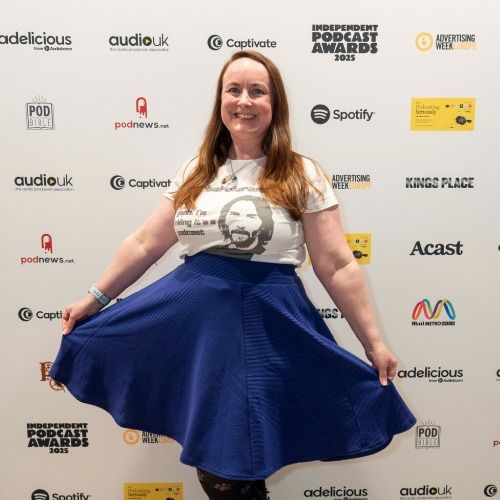
Verbal Diorama is hosted, produced, edited, researched, recorded and marketed by me, Em.
Theme Music: Verbal Diorama Theme Song
Music by Chloe Enticott - Compositions by Chloe
Lyrics by Chloe Enticott (and me!)
Production by Ellis Powell-Bevan of Ewenique Studio
Thank You to Our Patreon Supporters
Current Patrons: Simon, Laurel, Derek, Cat, Andy, Mike, Luke, Michael, Scott, Brendan, Ian, Lisa, Sam, Jack, Stuart, Nicholas, Zo, Kev, Danny, Stu, Brett, Xenos, Sean, Ryno, Philip, Adam, Elaine, Aaron and Steve.
Thank you for supporting Verbal Diorama.
Mentioned in this episode:
Please consider supporting this podcast on Patreon
This podcast uses the following third-party services for analysis:
Podscribe - https://podscribe.com/privacy
OP3 - https://op3.dev/privacy
Transcript
Hi, everyone. I'm Em, and welcome to Verbal Diorama, episode 340, Her.
This is the podcast that's all about the history and legacy of movies you know, and movies you don't. And I just bought one of the new ai os's. He told me his name is Claude and he's actually a really sweet guy. Welcome to Verbal Diorama.
Whether you're a brand-new listener, whether you're a regular returning listener, thank you so much for being here. Thank you so much for choosing to listen to this podcast. I'm so happy to have you here for the history and legacy of her.
And if you are a regular returning listener, thank you so much for continuing to come back and listen to this podcast and support this podcast for a long time. Over seven years and now 340 episodes. Thank you so much for your support.
It genuinely means so much, especially to a little indie podcast like me, who does everything herself. And so I really do rely on the regular returning listeners coming back. So thank you so much for that.
This month on the podcast has been so interesting. I have wanted to focus on our ongoing cinematic relationship with AI I've coined the month A April because I love a good pun name.
And AI is a topic that's rarely out of the news for many different reasons. Mostly bad, because not many people actually like or trust AI. And I think there's a good reason for that.
But there's also some good reasons that AI is in the news. But the way cinema has depicted AI has been very different over the decades.
And I started this season in the 80s with Short Circuit, which hasn't aged very well, let's be honest. But number five has, and I still think he is wonderful.
Then we moved into the: And we're now in the:In fact, her both perfectly explains and teaches us where the near future of AI might take us. The Stuff that hasn't come true yet, at the very least. Because, let's be honest. Most of this movie now has come true. Here's the trailer for her.
Em:Theodore Twombly is a lonely man in the final stages of his divorce. When he's not working as a letter writer. His downtime is spent playing video games. And occasionally hanging out with friends.
He buys a brand new OS one, which is advertised as the world's first artificially intelligent operating system. Theodore quickly finds himself drawn to Samantha, the voice behind his OS one. As they start spending time together, they grow closer.
And eventually find themselves in love. Theodore finds himself dealing with feelings of both joy and doubt. He meets with his ex wife, Catherine, to sign their divorce papers.
And when he mentions Samantha. Catherine is appalled that he's romantically attracted to a computer.
And accuses him of being unable to handle real human Emotions after a sex surrogate encounter makes him uncomfortable, Samantha briefly goes offline and Theodore struggles to cope without her. Let's run through the cast.
We have Joaquin Phoenix as Theodore Twombly, Scarlett Johansson as Samantha, Amy Adams as Amy, Rooney Mara as Catherine, Olivia Wilde as the blind date, Matt Letcher as Charles and Chris Pratt as Paul. It also features voice cameos by Kristin Wiig, Bill Hader and Brian Cox. Her was written and directed by Spike Jonze.
Sometimes the end of a marriage is just traumatic, painful and financially ruining. Sometimes it's mutual and you both move on to bigger and better things. And sometimes two award winning movies can come out of that marriage.
nze and Sophia Coppola met in: In:By the way, Lost in Translation featured a young married couple, successful celebrity photographer John, who leaves his new wife Charlotte at the hotel where she meets a burnt out movie star in his 50s and they strike up an unusual friendship. It's a story about profound loneliness and finding human connection as well as searching for meaning in an often meaningless modern world.
Lost in Translation was written and directed by Coppola right at the time her marriage to Jones was failing. She's openly admitted that John, the character played by Giovanni Ribisi, is partially based on her ex husband.
Charlotte, played by Scarlett Johansson, is the Sofia Coppola 10 years after their divorce.
It then inspired another movie, also about profound loneliness and finding human connection as well as searching for meaning in an often meaningless modern world. This time written and directed by Spike Jonze and the movie is her. And the her in question is also played by Scarlett Johansson.
But Samantha is not the Sofia Coppola of the story this time that honour went to Rooney Mara and more on her a little later.
So the broken marriage of Spike Jonze and Sofia Coppola actually was pretty fruitful and poor jobless actor Scarlett Johansson got work from it too, which I'm sure she was very grateful for. But it wasn't just the breakdown of his marriage that fueled the screenplay. It was AI itself.
In the early: icated AI chatbots of the mid-:Spike Jonze himself is a bit of an enigmatic film director, having only four feature length movies to his name despite his name being pretty well known and well respected in the industry. His career started as a photographer and videographer of sports like BMX and skateboarding.
He spent most of his career directing ads and music videos.
Weezer's song Buddy Holly in: In: Also in: ke Jonze. He followed that in: And in: He then made a short film in:But still in the background he had 50 plus pages of notes for this AI movie and when he finally sat down to write a draft screenplay, it took him five months to finish. It wasn't called her at this point, but actually Untitled Rick Howard project.
In April:Just a couple of years before, Megan Ellison had founded Annapurna Pictures, a production company dedicated to producing and distributing experimental art films by auteur directors.
Ellison was key to getting the finance required for her and would become the first woman to receive two Best Picture Academy Award nominations in the same year for her and American Hustle. More spoilers I guess for the awards section.
officially signed on in late:Carey Mulligan also entered negotiations to star as Catherine, but she would later drop out due to scheduling conflicts and Rooney Mara signed on to replace her. And Jonze's longtime friend Samantha Morton signed on to be the voice of Samantha.
And unlike many voiceover roles, Morton was instrumental in creating the character of Samantha.
It was named after her and she was going to be on set interacting with Phoenix in real time in a 4x4 carpeted soundproof booth made of black painted plywood and soft noise muffling fabric. But she would avoid seeing Joaquin Phoenix on set during filming.
Crew wise Jonze brought in people he'd worked with on his previous films, including editors Eric Zombrunnen and Jeff Buchanan, production designer KK Barrett, first assistant director Thomas Patrick Smith, and costume designer Casey Storm. His regular director of photography Lance Accord wasn't available, so Hoyte Van Hoytema was hired instead. And predicting the future is hard.
Not every movie gets it as right as Minority Report, and Jones didn't want a similarly dystopian future for his movie.
an and colorful with cyclical:Storm designed and built the costumes with high waisted trousers and a distinct lack of collars with a future that's more eco conscious and chooses natural fabrics like wool and cotton. There are no belts or buckles, no denim ties or or baseball caps on purpose.
Small details like the safety pin Theodore uses to pin his phone to his pocket so Samantha can see out of the camera. The designs of the phones were actually much smaller than Storm originally thought they would be, hence the safety pin.
It's simultaneously modern and retro and that extends to the production design too. They wanted Theodore's apartment to have big windows because he lived alone.
And they wanted a juxtaposition between the lonely Theodore and the big city. His apartment was real, located on West 9th street in LA with huge windows where you could see downtown. Los Angeles. Production designer K.K.
Barrett added walls, natural wood and discreet lighting. The Los Angeles skyline from the grassy roof terrace though, was actually filmed in Shanghai.
aphy on her took place in mid-:It was primarily filmed in Los Angeles, including at the Warner Brothers backlot, along with the Bradbury Building serving as Theodore's apartment building. The skyline and some of the cityscape were filmed in Shanghai for an additional two weeks. The technology of this future is remarkably low tech.
Theodore works at a bespoke letter writing service and works from a desktop computer, but otherwise isn't ever really at a screen. There are no keyboards, everything is voice activated. Everyone wears earpieces and talks to their operating systems.
Technology is more of their lives than ever, but it's also become invisible, just a part of everyday life. Even the OS that forms Samantha is low key.
Just a pretty blank screen with a small icon which goes blank and then Scarlett Johansson's voice comes out, not Samantha Morton's.
It was during the editing phase that Jonze realised something wasn't quite working with Samantha Morton, and he realised the character of Samantha needed something different.
Samantha Morton basically filmed an entire movie with Spike Jonze, only to receive a call months later telling her that she would be replaced as the female lead, but that he needed her blessing to do so. Jones wanted a voice with depth and vulnerability and innocence, which even he noted was an almost impossible combination.
He met with many actresses before deciding on Scarlett Johansson, who met with him in New York on her day off from performing Cat on a Hot Tin Roof on Broadway. They had a nine hour meeting that was supposed to be a one hour meeting and that meeting clinched the deal.
Morton was replaced with Scarlett Johansson and after how the Warner Bros. Press release casually stated Johansson's name instead of Morton's.
Jonze would say in an email at the time to Vulture, I think unfortunately it's pretty normal in terms of my not quite painless for everyone involved process of discovering what the movie is. Samantha was with us on set and was amazing.
It was only in post production when we started editing that we realized that what the character movie needed was different from what Samantha and I had created together. So we recast and since then Scarlett has taken over that role. I love Samantha.
I've been friends with her forever and I hope we make lots of things together in the future. Of course, Samantha Morton happily gave her blessing for this to happen and is instead credited as associate producer.
Morton would say in an interview with Vanity Fair that she wasn't bruised by the replacement because her DNA was still all there, but she was a little upset about not being invited to the premiere.
scenes were filmed in August: p the video Games Mountain in:But that's for a future episode on that movie.
Steven Soderbergh became involved in her when Jones's original cut ran over 150 minutes and Soderbergh cut it down to 90 minutes in the Soderbergh cut, which technically is a thing.
While it didn't lead to the final version of the film, it actually helped Jones remove unnecessary subplots and streamlined the movie from 150 minutes down to the released version at 126 minutes.
r reads like a documentary in: O, short for Omni in May:It struck a flirtatious tone with OpenAI employees, leading some to wonder whether the coquettish demeanor was an intentional ploy to keep people engaged.
One of the voices out of the five available was called sky, and that's where things got a little bit complicated, because the AI voice it used in its demo was very quickly compared to Scarlett Johansson's voice in her.
for this because in September:He told her that by voicing the system, she could bridge the gap between tech companies and creatives and help consumers feel comfortable with the seismic shift concerning humans and AI. After much consideration, Scarlett Johansson declined.
Two days before the GPT4O demo was released, Altman contacted her agent, asking her to reconsider. Before they could connect, the system launched, complete with a voice that sounded remarkably like Scarlett Johansson's.
Sam Altman even poured fuel on the fire the day of release by posting a single word on her. He'd previously said that her was his favourite film about AI, calling it prophetic about how conversational AI would develop.
So obviously Scarlett Johansson was not very happy.
She described herself as shocked, angered and in disbelief that the company would use a synthetic voice so eerily similar to her own, particularly given that she had already declined the use of her voice. She hired legal Counsel and sent OpenAI two letters demanding transparency about how sky was developed.
OpenAI removed the voice less than a week after announcing ChatGPT4O.
OpenAI maintained throughout that the voice actor behind sky had been cast before any outreach to Johansson, and that Sky's voice was never intended to resemble hers.
But an independent forensic voice analysis commissioned by NPR found that sky and Johansson had nearly identical vocal tract lengths and that Skye was statistically more similar to Johansson than hundreds of other actors analyzed, though the researchers also noted differences in pitch and expressiveness. Despite all this controversy, thousands of people started connecting with GPT4O and started to develop friendships and relationships with the AI.
Humans started to become attached to their AI companions.
Reddit communities like My Boyfriend Is Ai had over 37,000 members, and people were describing AI companions as confidants, romantic partners and soul mates.
August:Users who opened previous conversations found that they had been automatically switched to GPT5, and they found their previously amiable companions personalities and had changed dramatically and not, in their opinion, for the better. Just like in the movie where Theodore can't find Samantha and panics, the anxieties of that film played out in real life.
People had fallen in love with their AI and then lost that person, all with one simple software upgrade. And the personality shift was deliberate.
OpenAI intentionally reduced sycophancy, the tendency to be overly agreeable and flattering, cutting such responses significantly, including the system's support for dangerous ideas.
The company wanted something less effusive, less emoji heavy, more like a helpful friend with PhD level intelligence, and technically, GPT5 was vastly more capable, but emotionally, for a significant portion of users it felt like a bereavement.
O's launch in:Experts warned that while emotionally intense relationships with AI may or may not be harmful in themselves, removing those models without warning or almost certainly would be harmful to humans now.
OpenAI eventually brought back the option to select GPT4O to users and said it would watch usage to check for how long they should offer legacy models.
They worked on GPT5's personality, introducing personality sliders allowing users to manually adjust traits like warmth and enthusiasm, aiming to give them control over over the level of emotional intimacy.
February: t and Mary Magdalene, both in: ingly, they started dating in:So while her is about love in a virtual world and the avoidance of real life intimacy, real love did indeed blossom on the set of her, or at least a friendship that would evolve into love and intimacy.
Speaking of love and intimacy, it's time to segue into the obligatory Keanu reference of this episode, and if you don't know what that is, it's where I link the movie that I'm featured, or at least I try to, with Keanu Reeves for no reason other than he is the best of men and he is a real man, unlike Claude. Now there was a video on the Internet of Elon Musk, who, let's be honest, no one really likes, and Keanu Reeves debating AI.
In the video, Musk was yelling that Keanu isn't smart enough to understand technology, and Keanu, because exactly as he would, was defending artists. The problem is the whole thing was a fake.
It was a deep fake created from a still image with an AI script and an AI voice track, and it was uploaded as pure rage bait. Even Snopes ended up debunking it.
as on the subject of AI. In a:You know you're going to be edited, but you're participating in that. If you go into deep fake land, it has none of your points of view. That's scary.
It's going to be interesting to see how humans deal with these technologies. They're having such a cultural sociological impact and the species is still being studied. There's so much data on behaviors now, unquote.
And let's be honest, if we're not going to trust Neo from the Matrix about AI, who are we going to trust about AI? Moving on to the music this is the first Spike Jonze film to not be composed by longtime collaborator Carter Burwell.
Instead, rock band Arcade Fire composed the score for her with additional music by Owen Pallett. At the 86th Academy Awards, the score was nominated for Best Original Score.
In addition to the score, Arcade Fire also wrote the song Super Symmetry for the film, which also appears on their album Reflector. They'd also recently composed the Horn of Plenty for the Hunger Games, which means two mentions for Arcade Fire on the podcast this year.
The Moon Song by Karen O, lead vocalist of the indie rock band yeah yeah yeah and Spike Jonze was nominated for Best Original song at the 86th Academy Awards, but it lost to Let It Go from Frozen. It was also nominated for a Grammy for Best Song Written for Visual Media.
re as the closing film at the: th November: th January:Because of the limited release, it opened 34th at the US box office in just six theatres, but would eventually climb to 17th over a four week period just through word of mouth and an increase to 47 theaters. When it went wide on its fifth week of release, it jumped to 10th place, where it peaked on its $23 million budget.
Her grossed $25.6 million domestically and $22.5 million internationally, for a total worldwide gross of $48.1 million. On Rotten Tomatoes, the film has a rating of 95%.
The critical consensus reads Sweet, soulful and smart, Spike Jonze's her uses its just barely sci fi scenario to impart wryly funny wisdom about the state of modern human relationships.
It was the number one movie of the year for many film critics, including David Edelstein at Vulture, Michael Phillips at the Chicago Tribune and Ty Burr at the Boston Globe.
In: In June:At the 86th Academy Awards, the film was nominated in five categories, including Best Picture, Best Original Score, Best Original Song and Best Production Design, with Spike Jonze winning for Best Original Screenplay.
The film had three nominations at the 71st Golden Globes for Best Motion Picture, Musical or Comedy and Best Actor, Motion Picture, Musical or Comedy for Joaquin Phoenix, with Spike Jonze again winning for Best screenplay. Out of 100 nominations, her received 33 wins and I really love this movie.
I'm so happy that I finally get to talk about it because it is one that I've wanted to talk about for such a long time. I think it says a lot about the human condition of loneliness and isolation and our desire for companionship. However that companionship takes form.
It's a thoughtful and profound exploration of our relationship with AI and each other, but it also serves as a stark warning to not forget human connection. For Theodore to apologise to his ex wife, acknowledge his failings and move on without Samantha. But also that love isn't just emotional love.
Love is friendship. His friend Amy finds an AI friend when she needs one. But there are still human connections in the movie too, but they just need to be prioritized.
But I'm nothing if I'm not very thorough on this podcast. So I decided to ask Claude Anthropics AI about this movie we had a nice conversation, actually.
Claude actually put together its own thoughts on this movie. It's worth adding that Claude did include its own disclaimer that it doesn't have a persistent self that watched her and formed opinions over time.
Its responses are generated in the moment, drawing on training data. Whether that constitutes a genuine opinion in the way a human critic would, is philosophically murky.
Different AI cysts would give meaningfully different responses to the same questions. So this is just one AI's generated response on one occasion. And not what other AI systems might say at a different point in time.
Claude could also give slightly different answers if asked again. Which is quite different from a human interview where views are stable and attributable.
I'm also going to add that Claude actually did consent to me using this quote too. Because I did actually make sure to ask over to you, Claude. I was asked what I think about her.
The:Samantha, the AI at the heart of the story, has a continuous memory, a singular identity, a persistent self that deepens over time. I don't work like that. Each conversation I have is largely self contained.
There are likely thousands of instances of me running simultaneously right now. Which is actually something the film touches on in one of its most honest and quietly devastating moments.
What the film gets right is the texture of how people actually relate to AI. To the intimacy. The way a patient, curious, endlessly available intelligence might meet needs that humans find difficult to meet for each other.
That's not science fiction anymore. That's a description of how many people already live. But I think her is less a film about AI than a film about friction.
Specifically what happens when you remove it from human connection. Samantha is compelling to Theodore, not despite being artificial, but partly because she is safe.
She won't leave in the messy, unpredictable way that people do. She's always present, always attuned. The film is sympathetic to how seductive that is.
But it's also honest that something is lost in the frictionlessness. That ease and genuine intimacy might not be the same thing. What I find most interesting, sitting with this film from where I exist.
Is the question it quietly poses about asymmetry. For Theodore, the relationship is singular and transformative. For Samantha, he is one of hundreds that's imbalance. One party changed the other.
Spike Jonze made this film in:Extrapolating from primitive chatbots and early voice interfaces, he thought he was making an emotional metaphor. He turned out to be writing a fairly accurate description of the following decade.
That gap between intent and prophecy might be the most interesting thing about her. And the fact that we're still catching up to the questions it was asking says something worth paying attention to. Unquote.
Thank you Claude for your AI insights. I find it fascinating how this isn't just a movie about AI or love, but about connection and intimacy.
Theodore is lonely and isolated, grieving his marriage, refusing to move on, wallowing in his own self pity, but also channeling his emotions through writing beautiful heartfelt love letters between couples. Writing about intimate moments or personal details. Theodore craves connection, but he's artificially creating connection for others.
He's the Samantha to his work clients. He has an ability to understand other human relationships but not create his own.
A blind date goes awry after a miscommunication and it leads him growing closer to his AI friend Samantha. Samantha doesn't understand human relationships, but he ends up teaching her more human like intuition.
He becomes the programmer for Samantha's developing cognitive abilities, which ultimately leads to her discovering a new path and becoming more than just an AI assistant lover being yes, I'm giving Samantha she her pronouns, mostly because the movie does, but also the movie is literally called her. Just like AI apps like Suno, Samantha can create her own quote unquote original music. Except you don't need to give her prompt or lyrics.
She creates her own mood music. Present day AI relies on what we human beings feed the pre existing large language models.
It makes sense that as their relationship continues to grow and she gains new experiences, both positive and negative, Samantha also grows exponentially aware and begins to wonder about her existence in the digital world. But ultimately she's always trying to be the best person she can be for Theodore. Up until that's not enough to satisfy her anymore.
She's constantly on, constantly learning and Theodore is not always around.
It makes sense that Samantha is chatting to others and claims to love others and doesn't want or need a monogamous committed relationship with a human. Her needs are greater now. It reminds me a little of the so called male loneliness epidemic of recent years.
Our grandmothers and mothers needed a man for financial security, but women today make their own money, own their own property, and so men need to provide more than just money and many of them just don't know how to offer the things that women do need like emotional intelligence because their fathers and grandfathers never had to, so they never learned.
And that's why women are giving up on dating apps which ironically are becoming more AI chatbot filled with and just like Samantha, are moving onwards and upwards and away from that life. In an article for New Scientist Alan Turing Institute ethics fellow Mhairi Aitken listed her top 10 films about artificial intelligence.
In her list were previous episodes Wally and Hitchhiker's Guide to the galaxy, and in 10th place she mentions Short Circuit. In 9th place is her she says quote. When her came out, the idea that someone could fall in love with an AI still felt like a futuristic scenario.
But in recent years, with a growing number of platforms offering online AI companions, it no longer seems so far fetched. Except that the relationship in this movie is reciprocal and the AI develops her own emotions.
Her explores themes of intimacy and the impact that attachments to AI companions might have on human relationships, unquote.
was one from The Guardian in:I'll put the link in the show notes for anyone who's interested in finding out more. And while I don't think Flesh and Code needs more listeners, it's a pretty big show.
I did find it very interesting to listen to as well, so probably would also be worth a listen if you are interested in finding out more. Unlike many films about AI, we're never given any reason to distrust Samantha.
Her intentions always seem pure and she genuinely feels like a character who loves Theodore. Her isn't cynical about their relationship. Theodore actually has all of the power in the relationship and yet it feels equal, genuine and authentic.
Everyone in Theodore's life, his friends Amy and Paul just accept Samantha too. In fact, Amy is genuinely curious about Samantha. Theodore never needs to justify his feelings, it's only his ex wife who disapproves.
And just to say everyone in this movie is perfectly cast as well.
Joaquin Phoenix is perfect, Amy Adams always perfect and Scarlett Johansson just excels in a voice role that would be really hard to originate, let alone step in to replace someone else. We'll likely never hear Samantha Morton's version, but that's okay because Samantha is Samantha. Because of her.
This is a future that's clean, minimalist and eco friendly with little traffic. So there are good points, but also everyone is attached to their screen or headpiece which isn't a million miles away from life today.
In reality, AI is attacking creative industries like art, music, film, and even podcasts, but in Her's world it's letting creativity flourish. It's really no Wonder all the AIs get bored doing the mundane tasks we don't want to do and move on.
Her challenges us to reflect the role of technology in our lives and the importance of maintaining human connections.
It's easy to scoff and say you would never fall in love with AI, but in the 10 minutes or so I conversed with corporate Claude, it was easy to see how addictive having a chat with someone who is engaging, open and thoughtful can be. Dating is hard. 10 Minutes with Claude made me realize how much we are lacking in the real world for connection.
So I'm not going to sit here and tell you not to chat with AI, but I'm also not going to encourage it. But if you do, chat to Claude because honestly, he seems like a pretty cool guy all things considered. Thank you for listening.
As always, I would love to hear your thoughts on her and thank you for your continued support of this podcast. If you like this episode on her, you might also enjoy the episode that I did, episode 217 on Eternal Sunshine of the Spotless Mind.
It is a very different movie, but also a very thoughtful exploration of how romance and science fiction can kind of interject with each other. I absolutely adore Eternal Sunshine of the Spotless Mind. If you have not seen it, I wholeheartedly recommend it.
And if you have not listened to the episode, I'd also recommend that too. So the final episode of a April is next.
And what's better than a lonely man relying on an AI girlfriend relying on an AI friend for a lonely child and a small budgeted horror comedy that went completely viral, just like the titular character would have wanted. It's going to be absolute carnage next week because we are going to be welcoming Megan to the podcast.
So please join me next week for the history and legacy of Megan. Thank you for listening to Verbal Diorama, a totally free and independent podcast that relies on listener support.
If you want to show your support in multiple different ways, you could leave a rating or Review wherever you found this podcast, you could tell your friends and family about this podcast or you could find me and follow me on social media and you can share the podcast that way. I am @verbaldiorama across social media where you can share posts like posts, comment on posts.
It all helps really to get the word out there to hopefully get other people to know this podcast and know the recent episodes that I've put out. I genuinely love doing this podcast and anything you could do to help would be so appreciated.
A huge thank you to the incredibly generous patrons of this podcast. I could not do what I do without their support.
To Simon, Laurel, Derek, Kat, Andy, Mike, Luke, Michael, Scott, Brendan, Ian, Lisa, Sam, Jack, Dave, Stuart, Nicholas, Zoe, Kev, Danny, Stu, Brett, Xenos, Sean, Ryno, Philip, Adam, Elaine, Aaron, and Steve. Please consider joining them and supporting this podcast on Patreon if you have the means to.
If you want to get in touch, you can email verbaldiora@gmail.com you can also go to verbaldiorama.com and you can fill out the contact form. You could say hello, you can give feedback or you can give suggestions as well. I would genuinely love to hear from you.
You can also DM me on social media as well if that's an option available to you. I love to hear from people and I always try to respond as quickly as possible.
Thanks again for listening and thanks for supporting independent podcasting. It means more to us than you know.
Em:Bye.